The Genius of Granny Kay

How the FIA Process Elevates Translation Voices that Matter

Kay is a grandmother in her tight-knit community. She’s never set foot in school, but she wears the kind of wisdom that only comes with age. She is not afraid of hard work or tired muscles. Her wrinkles and grey hairs are well-earned, as is the trust that she has built with those around her.
As she feeds her loved ones and washes clothes with her neighbors, helps her husband in the fields and carries around her grandchildren, she tells stories. People hang on every word she says because she reflects their culture, she shares truth, and she is a master communicator.
Historically, the Bible translation process has often missed the value of Granny Kay. But when the goal is to have trustworthy, understandable, appealing, and appropriate Scripture that communities engage with for years to come, the genius of grannies should not be underestimated.
In church-based Bible translation, the FIA process (which stands for familiarize, internalize, and articulate) is maximizing the gifts Granny Kays of the world have to offer projects. “A lot of what we do is about recognizing the genius of Granny Kay and trying to help her, equip her, to translate God’s Word for her people,” said Stephen Stringer, CEO of Word Collective that creates the FIA materials, at a recent FIA training.
The training, which took place February 24–26 in Orlando, gathered around 25 professionals, some translation consultants and some AI technologists across ETEN. The event was an effort to integrate advanced technology with flexible quality assurance methods by walking participants through the process that over 720 translation teams from more than 12 Bible translation organizations and 20 countries have already integrated into their work.
A Different Way to Approach Translation
On the first day of the training, Stephen stood up front and told everyone what we in our literate culture hate to hear: “Please put away your tablets, laptops, and notebooks.”
While some participants exchanged doubtful looks and people put away their notetaking devices, the point was clear. FIA wasn’t designed only for the tech-reliant Western context; the academic Bible consultant, the well-read pastor, the translation agency staff member.
Instead, FIA places orality front and center so that exegesis is accessible and everyone in a community can participate in the translation process.
Created in partnership with Word Collective, Global Partnerships, and the ETEN Innovation Lab, the FIA project (now in the utilizing stage of exploration, see appendix) started in 2023 in response to two translation projects in Papua New Guinea asking for accessible exegetical materials for their translators. Since then, FIA materials have been created to be open-source, multi-model, for oral or text based translation, and easy to use in a variety of cultures and contexts.
Through listening and repetition, through verbally interacting with the meaning of Scripture’s message, through digging into cultural questions and wrestling with key words, and doing it all within a group setting, Granny Kay and her community can know and share God’s Word in a way that works best for them.
The 6 Steps of FIA
Over the training, attendants learned about the six steps of FIA by participating in the process themselves. Broken up into three groups, they used the LangQuest app, in the developing stage of exploration (other tools currently incorporating FIA include AVTT, the Bible Well App, and Render) to translate the pericope Mark 14:1–11. This passage was about the church leaders wanting to kill Jesus, a woman anointing the Lord through pouring expensive oil on Him during Passover, and Judas conspiring with the leaders.
Here are the steps the groups followed, much like teams on the field would when using the FIA method, to go from hearing or seeing the passage to finishing an audio or visual recording of the story suitable for a chosen audience.
Hear and Heart: In this FIA step, the goal is to familiarize people with the Scripture. The groups listened to an audio version of the passage three times, in different translations if possible. Then they had a discussion around some specific questions – What do you like in the passage? What do you not like or not understand? What does it tell us about Jesus or God? What does it tell us about people? How does the passage affect our daily lives? Who do you know who needs to hear this passage?
Setting the Stage: For this part, the groups listened to the passage again, then followed audio prompts which walked them through discussions around the setting of the story and connecting that to their own cultural experiences. They examined pictures of how the disciples would recline at tables and what the woman’s alabaster jar could have looked like, and answered questions such as: What do people do in our culture to show honor or thankfulness? And how do we treat dead bodies when preparing them for burial?
Defining the Scenes: This phase of the FIA process helps people start visualizing the passage. Groups listened to the Scripture again and heard a description of the characters and unique scenes in the verses. They then took ordinary objects to visually depict the passage. One group used markers, drink cans, post-it notes, and other items to show the story. Other groups drew whiteboard pictures to make Mark 14 come to life.

Embodying the Text: Next, the groups acted out the Scripture. They went through what the story was saying with dialogue, with just narration, and mimed without any words at all. The facilitator chose certain key moments to ask actors how their characters might be feeling in the middle of the action.
Filling the Gaps: Then the groups learned about and discussed key terms in the passage. For example, Passover, teachers of religious law, perfume made from pure nard, and disciples were among the terms in Mark 14. They were reminded of where these terms may have come up in their work before and were guided through choosing the best words or phrases for their language and cultural context.
Speaking the Word: In this last step of FIA, the groups practiced retelling the passage in their language/for their audience using the terms they’d determined and what they learned from the other steps of the process. Then they audio-recorded a final version of the passage that they all agreed on.

The Impact of FIA
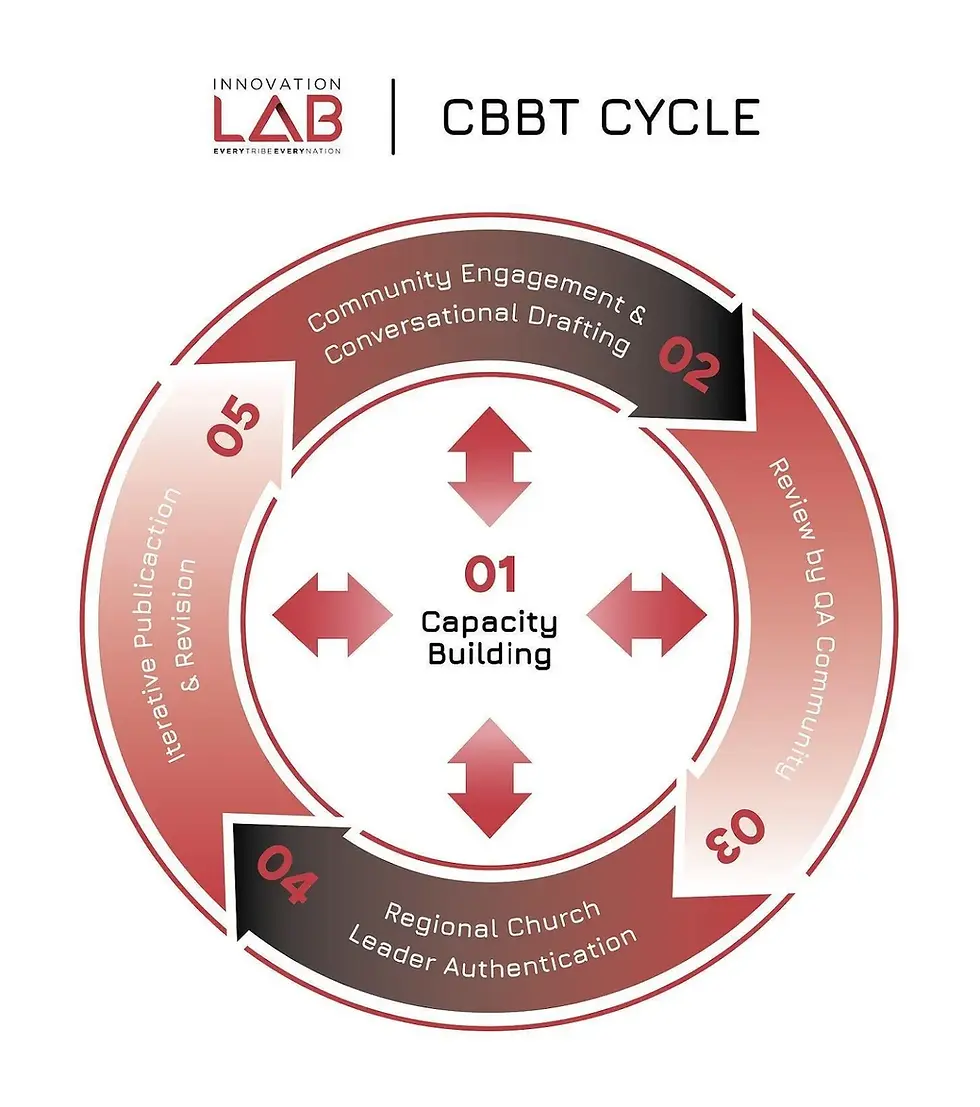
These FIA steps, which can be incorporated into a translation team’s process as they draft, before moving onto peer and community reviews, are a helpful way to familiarize, internalize, and articulate Scripture.
A Seed Company employee who attended the training said, “I can imagine people all over the globe, no matter their context, gathering to translate Scripture using the FIA process we just learned. If we want Bibles that communities use, we need to start with translators who have gotten God’s Word into their own hearts themselves.”
On the field, it makes all the difference. After Stephen conducted a FIA training for a church in Papua New Guinea, he asked, “When are you going to be finished?” They said, “We’re never going to finish! Once we get the Bible translated, we’re going to just go back and do it again. And again. And again. Because what we’re doing is completely changing, not just us, but our community.”
And for the majority of remaining All Access Goal languages—especially those where oral solutions and church ownership can improve the pace, quality, and outcomes—the fact that FIA is a key process within church-based Bible translation and oral contexts is significant. Accomplishing our shared goals includes equipping local capacity. FIA and the Granny Kays of the world are a part of that life-changing work.
Want to learn more about how you can incorporate FIA into your Bible translation tools and work? Visit https://fia.bible/.
Appendix
Stages of Exploration
a. Approaches to ways forward across all Lab priorities may fail or pause at any stage prior to utilization.
b. The Lab's goal is to move approaches to utilization, then influence to see it scale.


Comments