Why Training Matters in Church-Based Bible Translation

Updated: Jul 31
Building a Global Network of Trainers and Mentors

In June, nearly 40 experienced Bible translation practitioners from across the globe gathered in Kenya with a shared purpose: to train the trainers who support flexible and scalable quality assurance through Church-Based Bible Translation (CBBT).
For years, many of these participants had served as CBBT trainers. But this gathering reflected an important shift.
"The goal is to increase the church’s capacity for translation," explains Andy Kellogg, one of the ETEN Innovation Lab’s Strategy Leaders. "We recognize the value these trainers can bring when they serve as mentors and coaches for translation projects… building relationships and growing a network of experts who can support teams as challenges come up."
That shift addresses one of the most common questions surrounding Church-Based Bible Translation: How are churches equipped to do this well?
Increasing Capacity Throughout Translation Work
Local speakers bring a deep understanding of their language, along with cultural knowledge and communicative intuition. Where a church already exists, believers also bring theological understanding shaped by their lived experience as a community of faith. With that recognition, the question shifts from whether churches already possess all the skills needed for a high-quality translation to whether they have effective pathways for continued growth.
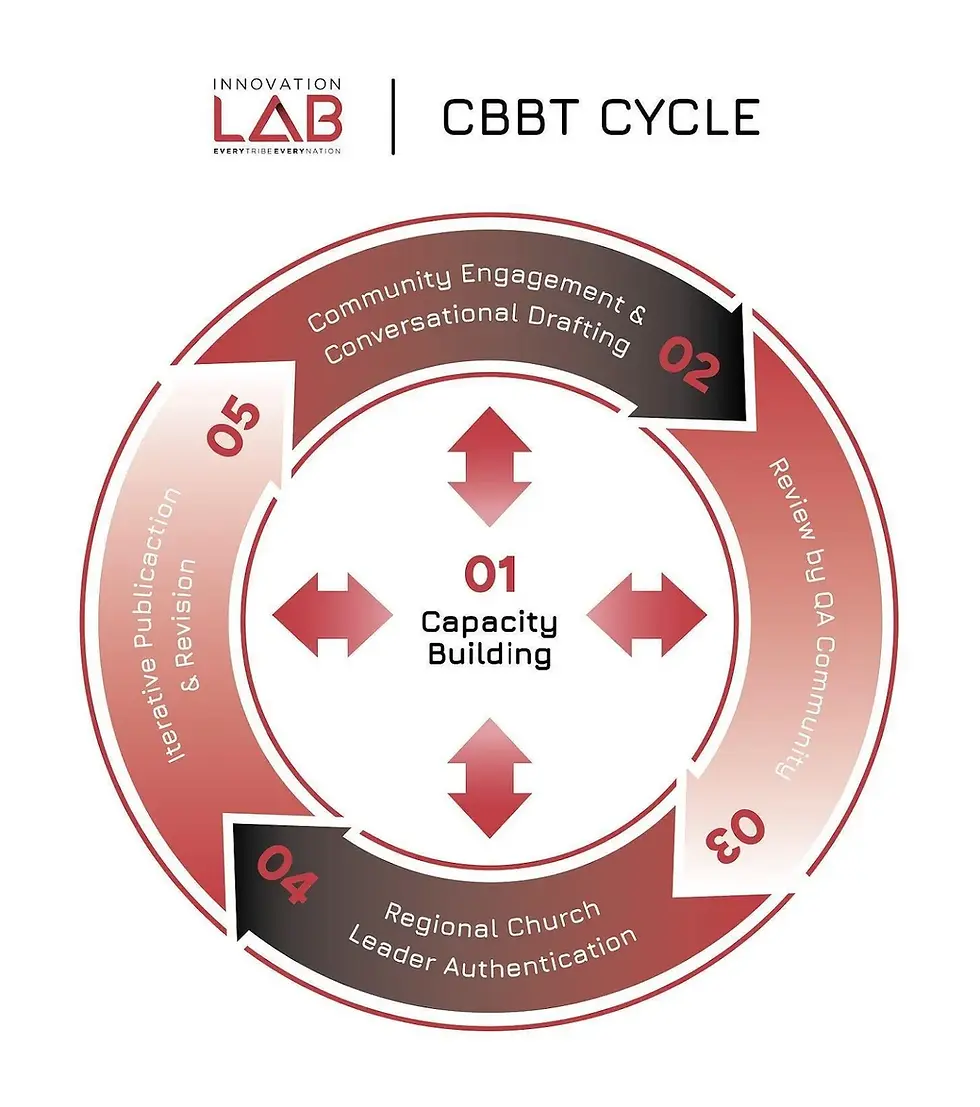
In Church-Based Bible Translation, training is an ongoing process rather than a one-time prerequisite. Churches increase their translation capacity through openly available biblical resources, practical technology, mentorship, relationship in church networks, and experience gained while actively engaging with Scripture. Learning happens continuously as churches move through the work of translating God's Word together.
A Network of Mentors
During the Kenya gathering, participants explored what it means to become part of a global support network rather than simply leading occasional training events.
Andy described the vision through a simple illustration:
"You're riding your motorcycle around, and you start to develop a problem with your motorcycle. The good news is you've been to this village before, and you know that there's a mechanic in this village.
If that mechanic cannot solve the problem alone, they call on another mechanic with additional expertise. The goal isn't for one person to know everything. It's for trusted relationships to ensure that help is always within reach.”
The same principle applies to Bible translation. As churches wrestle with certain passages or face challenges, they can draw on a growing network of experienced practitioners who provide guidance and are able to connect them with additional expertise when needed.
Learning That Continues
For one participant from Nigeria, Ibrahim, the vision immediately became practical. After a full day discussing mentoring and coaching, he began reaching out to the translation teams he already served.
As Andy recalled, "He stood up... and said, 'I just wrote to all of the people I'm working with and started being a coach to them because I realized that's a way that I could help them and support them.'"
Rather than waiting for another formal training event, he immediately began cultivating the kind of ongoing relationships the network was designed to encourage. Workshops remain valuable, but they are only one part of developing translation capacity. Lasting growth comes through continued trust-building and learning alongside others over time.
Equipping the Church for the Future
In 2025, the CBBT Training Network was launched in collaboration with Wycliffe Global Partnerships and Word Collective to equip global trainers. Over 10 workshops were hosted across more than seven countries, with courses focused on project development, initial drafting, and quality assurance. This year, that work continues through the Kenya global event and expanded regional training.
As more churches participate in Bible translation, the need is not simply for more workshops. It is for stronger networks of people who can walk alongside one another. People like Ibrahim who are excited to share collective wisdom, enthusiastically desiring to see the global church grow in its capacity to translate and use God's Word.


Comments