New Tool Offers a Broader View of Translation Quality

Updated: 3 days ago
3D Review brings together perspectives from translation teams, churches and communities to support flexible and scalable quality assurance.
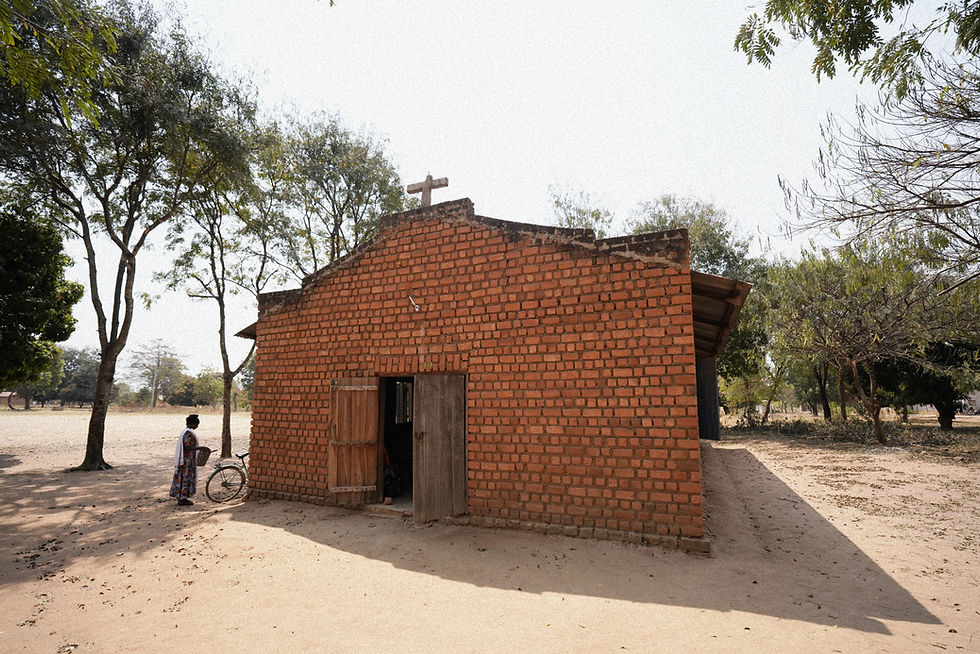
Imagine a church-based translation team reviewing its work. Translators and local church leaders are working together to produce Scripture their community can understand. But for projects like theirs — using emerging quality assurance methods — it may not be easy to assess whether their process is producing a trustworthy translation, or whether the translation is understandable.
For partners supporting these emerging approaches, the question may be how to quantify the impact of the translation.
A new tool called 3D Review, built by Wycliffe Bible Translators, Seed Company, unfoldingWord, SIL and the ETEN Innovation Lab, can shed insight on both questions.
A Three-Dimensional Perspective
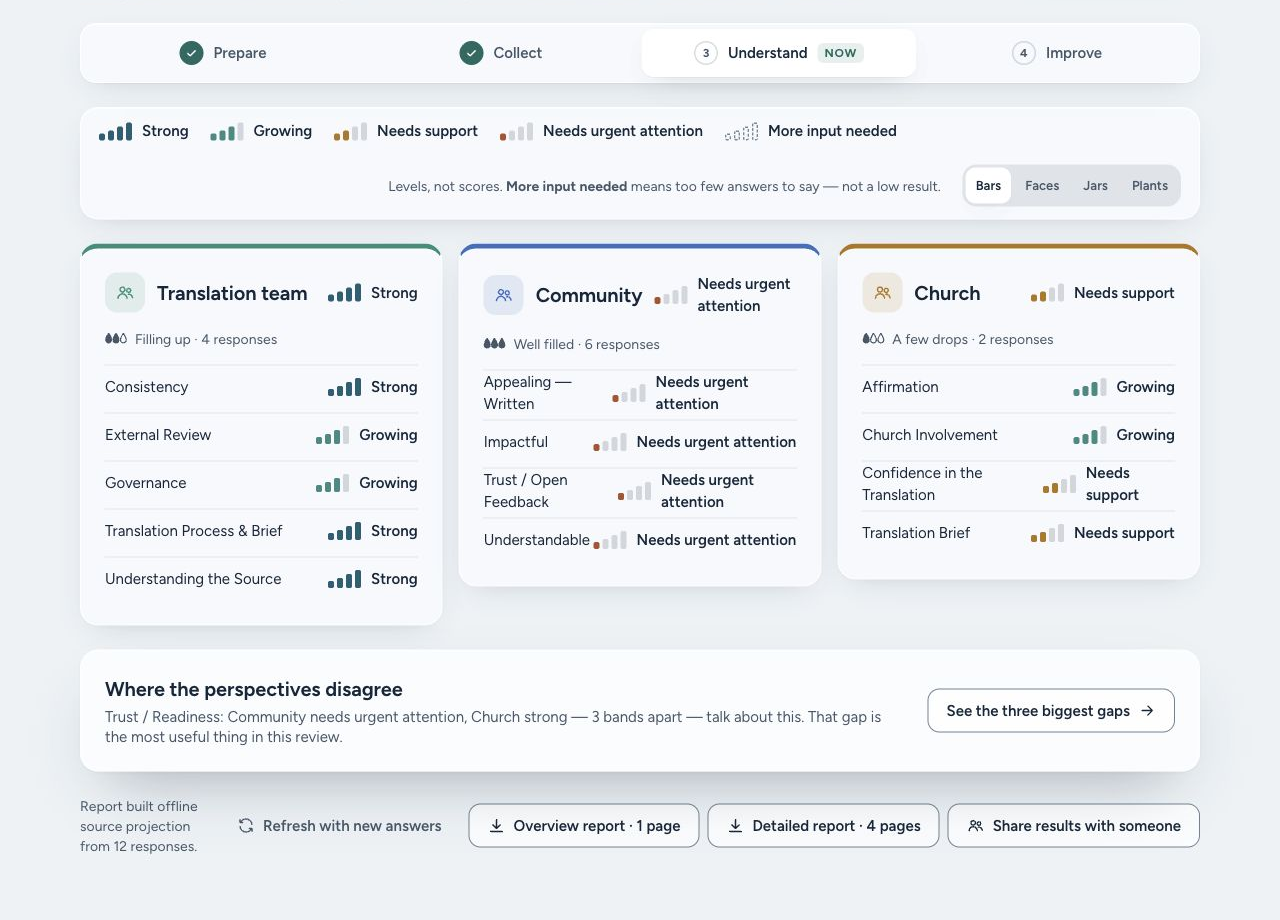
3D Review is a survey-based assessment that produces a multi-dimensional view of a Bible translation’s trustworthiness, usability and impact. Short, flexible surveys gather data from multiple perspectives of the project:
The translation team (how the work is carried out)
The church and local leaders (their involvement, confidence and observed impact among congregants)
The community (whether the translation is understandable, appealing and life-changing)
These three perspectives are then visualized in generated reports that can offer high-level summaries of the big picture or detailed comparisons that pinpoint disconnects. The result is a comprehensive view into how a translation process is or is not working, whether the church’s expectations and needs are being met and what observable change community members are experiencing.
Think of a translation project as a gemstone, each facet represented by a different group’s concerns. Do we have the appropriate quality assurance processes in place? Are the church leaders involved throughout the process? Is the completed work making an impact in the lives of the people? Leaders may commonly respond to these questions separately, creating a disconnected approach to solutions. 3D Review can visualize strengths, needs and opportunities as facets of the same object, producing more comprehensive insights.
In a Southeast Asia pilot of 3D Review, community members responded to their survey by pointing out audio quality issues. When those results were shared, project leaders noted that they were already planning high-quality studio recordings in the next phase of their project. This feedback communicated to them that they were correctly anticipating community needs and aligning with expectations.
Measuring Impact
One of the tool’s unique features is the community impact survey. Questions are worded to invite honest reflection and cover topics like:
What changes have we noticed in how we use the Bible since this translation came?
How much have we learned about God?
What changes have we noticed in our thinking and feeling?
Taken from a large enough pool, the answers can indicate alignment or misalignment and inform larger understanding and strategy. This feature signals potential for understanding Scripture impact in quantifiable terms.
A Complement to Existing Processes
3D Review doesn’t directly analyze the translation but can complement other quality assurance tools (such as AQuA) by measuring process effectiveness, the church’s reception and the real-world impact on people.
The tool serves both established and emerging translation approaches; any existing team members, including consultants, translators, community testers, pastors or association leaders would, for example, complete the surveys to produce a holistic picture of project health. If no quality assurance process exists, the assessment would flag that as an area needing attention.
3D Review serves both established and emerging translation approaches
In that Southeast Asia field test, a village pastor also took the assessment in his role as an exegetical checker. Besides giving him a place to record his impressions of the translation process and effectiveness, the survey questions themselves cast a vision of what he is working toward and how that should inform his day-to-day work. He said, “I’ve learned so much about what I should be doing in the project.”
Join the Experiment
3D Review is still in an experimentation phase. We’re looking for strategic partners and early-adopter teams willing to facilitate assessments and help shape what it becomes. The assessment surveys are short and adaptable, meaning the tool can be used in any project context, including sign language and oral modalities. They can also be repeated over increments of time to produce a long-term trajectory view.
If your team would like to learn more, contact lab@eten.bible.


Comments